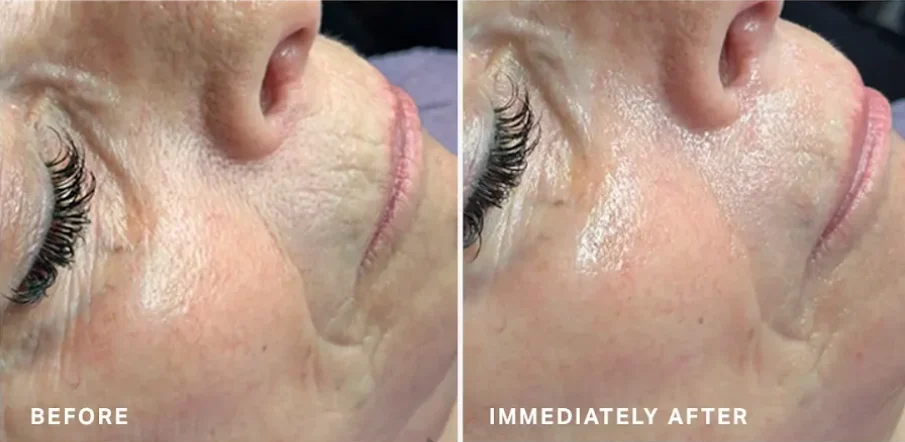
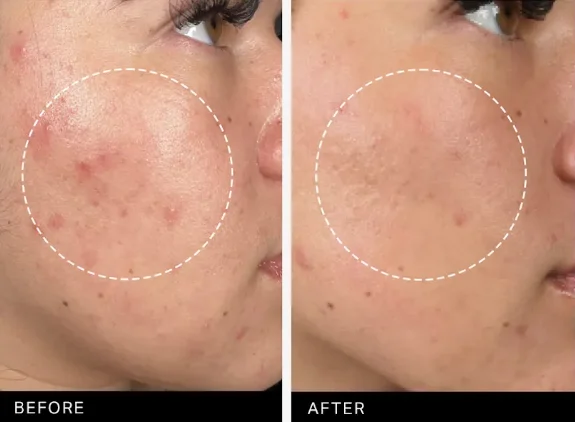
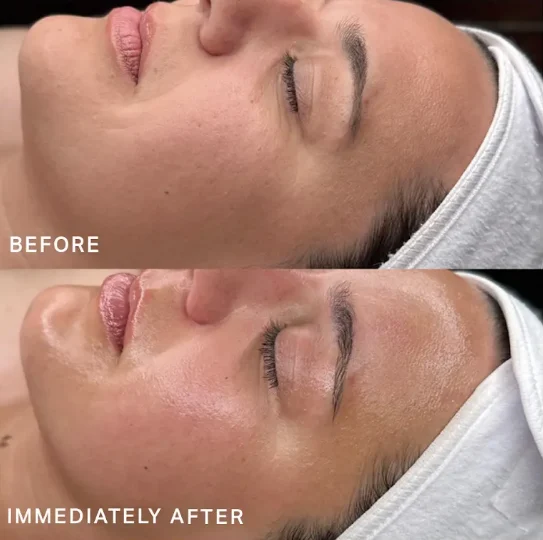
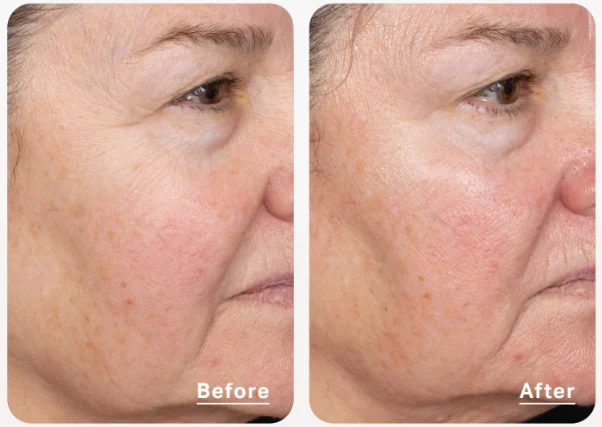
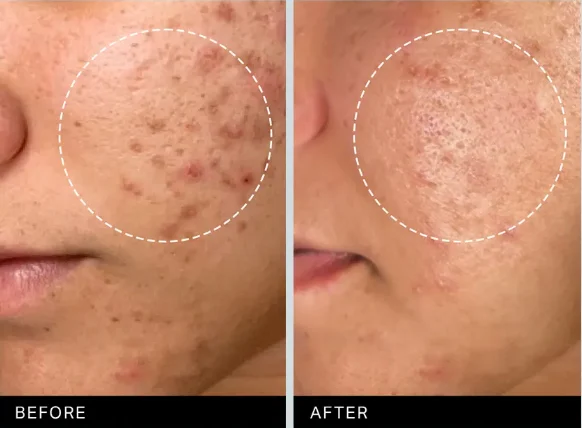
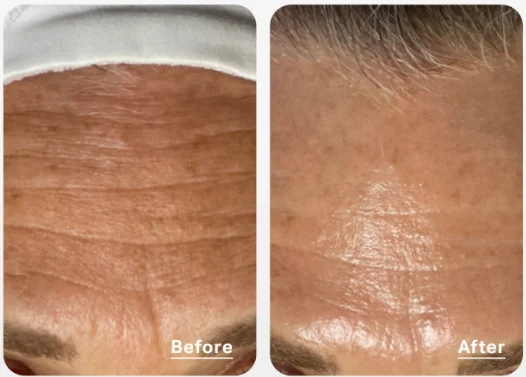
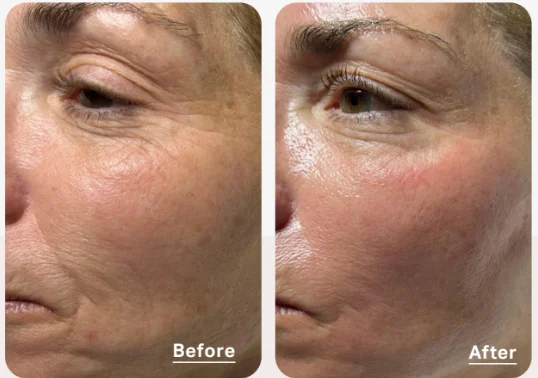
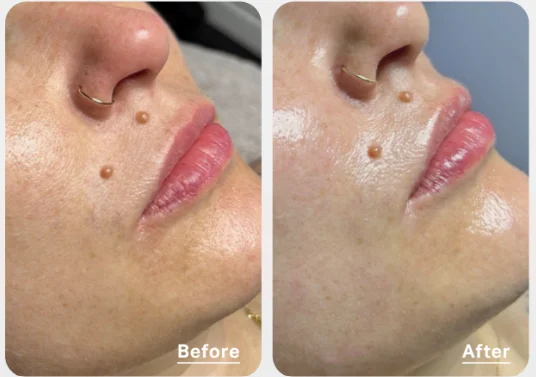
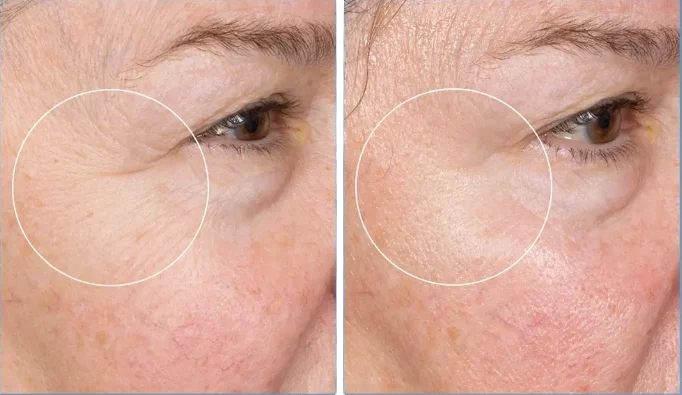
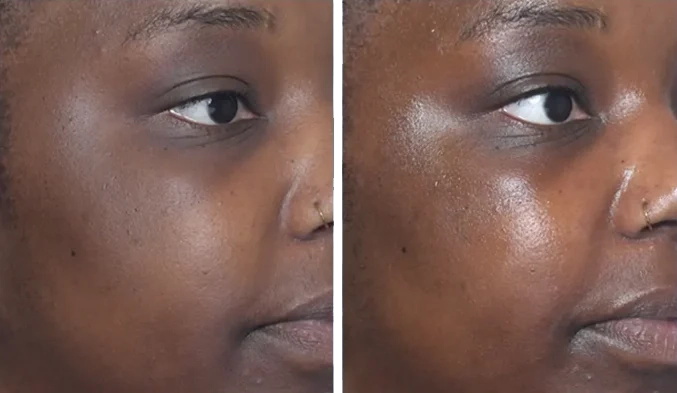
The HealthPoint Laser procedure is non-invasive, clinically proven, painless and affordable. Unlike spa and aesthetic practices, HealthPoint uses a highly advanced low-level laser that does not damage cells. This means that you leave the clinic looking and feeling great, with zero pain and zero recovery time. Our laser is designed to stimulate your body's natural ability to rejuvenate, combining leading technology with ancient Chinese medicine and resulting in fresh, healthy, younger-looking skin without peeling, redness or discomfort.

Treat yourself to all the benefits of the spa, under the care of qualified health professionals. When you arrive at the Clinic, you will:

  • Change into a gown and slippers; wear a headband and protective glasses;
  • Recline on our comfortable lounge chair, relax with a warm bean bag around your neck and be covered by a blanket while listening to soothing music;
  • Have your makeup removed with organic all-natural spa cleanser;
  • Relax to gentle music while our clinician administers laser stimulation to acupoints on your face, increasing blood flow to key problem areas and promoting a sense of deep relaxation;
  • Enjoy the application of an organic clay mask containing essences of 24 proprietary extracted organic and/or wild-crafted herbs that have been proven to restore, rejuvenate and regenerate the skin. A mixture of deeply penetrating oils is also added, along with the delicious fragrance of essential oils, to create the most powerful, all natural skin rejuvenation product ever developed.
  • Experience laser stimulation of acupoints on the body related to skin improvements and stress points, enhancing relaxation;
  • Have your exfoliating clay mask removed;
  • Have the laser then applied to the larger regions of the face and to specific areas around your eyes, mouth and others that concern you, to customize your treatment; and
  • Infuse your skin with organic skin rejuvenation cream that combines rare botanicals with 80 energized minerals. The entire treatment takes one hour, so you can get on with your day looking and feeling great.

You will leave the Clinic feeling deeply relaxed, with fresh, soft, hydrated skin that displays visible results in the days and weeks to follow. We recommend one treatment per week for 8 to10 weeks to achieve optimum results.  The HealthPoint Laser Skin Rejuvenation treatment, unlike many other spa or thermal laser procedures, causes no side effects, no pain or downtime, is non-invasive, completely safe, clinically proven, and affordable enough to be part of your healthy skin care regime.


Laser is a modern method of therapy. The laser converts electrical energy into a form of light energy that is transmitted by means of specially designed lasers. Low power lasers do not generate heat, therefore when the laser contacts your skin, you experience no warmth or burning.

HealthPoint Laser Clinic uses the Theralase laser, which, applied to specific areas on the face and body, revitalizes the skin resulting in visible improvements to your general appearance.  It does this by:

  • stimulating the production of fibroblasts, the cells responsible for collagen production.  The collagen helps fill in wrinkles and fine lines.
  • stimulating the production of keratinocytes, new skin cells that give the face a more even, healthy appearance.
  • increasing the production of hyaluronic acid by fibroblasts.  Hyaluronic acid is a natural substance in the skin that binds water.  The increase in HA levels greatly improves the hydration of the skin.
  • stimulating the production of nitric oxide, a powerful vasodilator. The improved blood flow helps nourish new skin cells with an improved supply of nutrients.  The increased blood flow to the face also produces a more youthful glow.

What causes my skin to change?

Skin changes are related to environmental factors, genetic makeup, nutrition and other factors.  The greatest single factor, though, is sun exposure.  This can be seen by comparing areas of your body that have regular sun exposure with areas that are protected from sunlight. Naturally, as we age, our skin undergoes many changes.

Aging skin

What happens when skin ages?

  • turnover of new skin cells (keratinization) decreases;
  • the natural process of skin erosion, the sloughing off of dead skin cells, slows down and becomes uneven, giving the skin a dry and rough character;
  • decrease in hyaluronic acid, a natural water-binding substance found in large quantities in younger skin;
  • collagen becomes disorganized and fragmented;
  • the number of melanocytes decreases, but the remaining melanocytes increase in size.  This results in paler skin, with some large pigmented spots (age spots, liver spots, lentigos) that may appear in sun-exposed areas;
  • changes in the connective tissue reduce the skin's strength and elasticity.  This is known as elastosis and is especially pronounced in sun-exposed areas (solar elastosis).  Elastosis produces the leathery, weather-beaten appearance common to farmers, sailors and others who spend a lot of time outdoors;
  • the blood vessels of the dermis become more fragile, which in turn leads to bruising, bleeding under the skin, cherry angiomas and other conditions;
  • sebaceous glands produce less oil as you age.  Men experience a minimal decrease, usually afer the age of 80.  Women gradually produce less oil beginning after menopause.  This can make it harder to keep the skin moist, resulting in dryness and itchiness; and
  • the subcutaneous fat layer, which provides insulation and padding, thins.  This increases risk of skin injury and reduces ability to maintain body temperature.

Signs of Aging Skin

  • wrinkles
  • sagging skin
  • thin, translucent skin
  • hollowed cheek and eye sockets (loss of fat)
  • dry skin
  • furrows in brow or forehead
  • drooping eyelids
  • hair loss, unwanted hair, greying hair

Exfoliation 

New skin cells are created in the skin's lower layer, the dermis. Over time, cells migrate to the surface of the skin. During their 27 day journey, they die and become saturated with keratin. Keratin is important because it protects the skin from outside elements. During aging, the natural process of skin erosion becomes uneven, which gives skin a dry and rough character.

Exfoliation is a cosmetic treatment that removes the outer layer to reveal the newer skin beneath. This shedding of the outer layer unclogs pores, keeps skin clean and helps reduce acne breakouts. Exfoliation should always be done after cleansing the skin. Exfoliation is important for both women and men.  For men, it exposes the hair follicles, allowing for a better shave. It is possible to overly exfoliate, which dries and irritates the skin. 

Anatomy of the skin

To understand the process of skin rejuvenation it is important to review basic skin anatomy.

Skin is composed of three primary layers:  Epidermis, Dermis and Hypodermis.  Each layer contains connective tissue with collagen fibers to give support and elastin fibers to provide flexibility and strength.

Epidermis is the outermost layer of the skin and forms the waterproof, protective wrap over the body's surface.  Skin cells, pigment cells and proteins are all found in this layer.

The epidermis contains no blood vessels.  Cells in the deepest layers are nourished by diffusion from blood capillaries extending to the upper layers of the dermis.  The main type of cells making up the epidermis are merkel cells and keratinocytes, with melanocytes and langerhan cells also present. 

Keratinization

The epidermis can be further subdivided into the following strata (beginning with the outermost layer):  corneum, granulosum, spinosum, basale.  Cells are formed through mitosis at the basale layer.  The daughter cells move up the strata changing shape and composition as they die due to isolation from their blood source.  The cytoplasm is released and the protein keratin is inserted.  They eventually reach the corneum and slough off.  This process is called keratinization and takes place within about 27 days.  The keratinized layer of skin is responsible for keeping water in the body and keeping other harmful chemicals out, making the skin a natural barrier to infection.

Dermis is the layer of skin beneath the epidermis that consists of connective tissue and cushions the body from stress and strain.  The dermis is tightly connected to the epidermis by a basement membrane.  It also harbors many nerve endings that provide the sense of touch and heat.  It contains hair follicles, sweat glands, sebaceous glands, lymphatic vessels and blood vessels.  The blood vessels in the dermis provide nourishment and waste removal to its own cells as well as the stratum basale of the epidermis.

The dermis is structurally divided into two areas:  a superficial area adjacent to the epidermis, called the papillary region, and a deep thicker area known as the reticular region.  The papillary region is composed of loose connective tissue.  It is named for its fingerlike projections called papillae, that extend toward the epidermis.  The papillae provide the dermis with a "bumpy" surface that interdigitates with with the epidermis, strengthening the connection between the two layers of skin.

The reticular region lies deep in the papillary region and is usually much thicker.  It is composed of dense irregular connective tissue, and receives its name from the dense concentration of collagen, elastin, and reticular fibers that weave through it.  These fibers give the dermis properties of strength, extensibility and elasticity.

Hypodermis is not part of the skin, and lies below the dermis.  Its purpose is to attach the skin to underlying bone and muscle as well as supplying it with blood vessels and nerves.  It consists of loose connective tissue and elastin.  The main cell types are fibroblasts, macrophages and adipocytes, the fat cells.  The hypodermis contains 50% of all body fat and serves as padding and insulation for the body.

[back to top